I wrote last year about my efforts to get my health back on track in 2024, and a big part of this was to exercise more. Walk more. Run a bit. Sit less. Move more.
Even then, I knew that the only thing harder than starting to exercise more would be to maintain that when it wasn’t a new thing. So… what happened in 2025?
I’m ridiculously pleased to say that I did it.
I not only maintained what I started last year, but I improved on it.
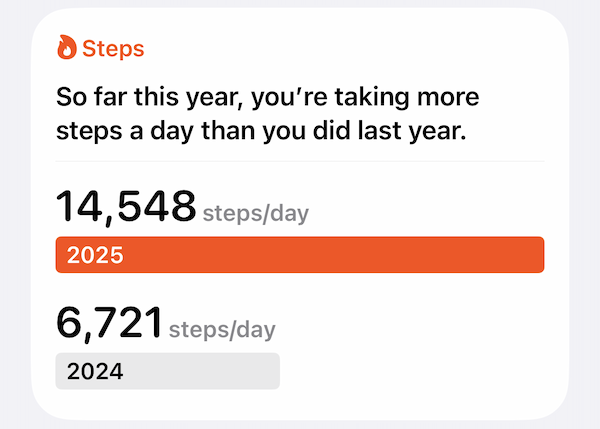
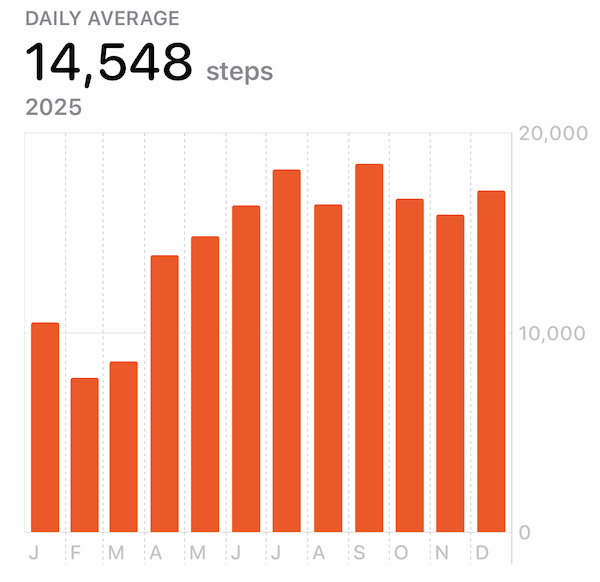
Walking has become a daily habit and a routine – and I’m still noticing the benefits (physical and mental) that I talked about last year.
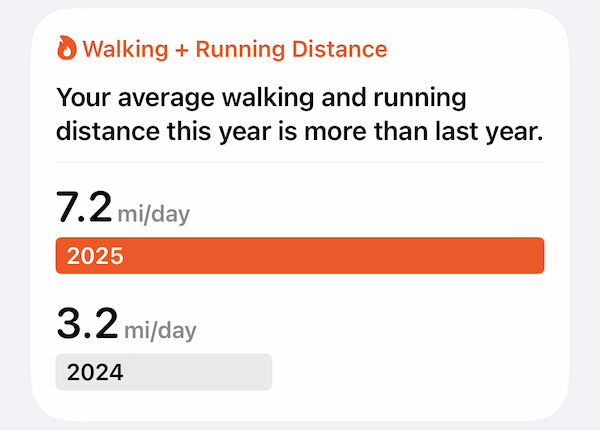
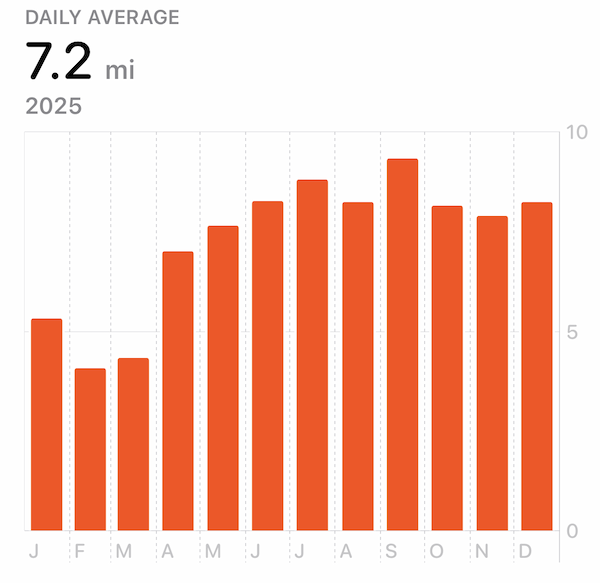
An interesting side effect is that I’m driving less this year.
I switched my (admittedly very short) commute from a five-minute drive to a one-hour walk. I’ve walked to work before but only in the summer, only a few times a week, and only one way per day (e.g. drive to work in the morning and walk home at the end of the day, then the next day walk to work and drive home). This year I’ve walked both ways, five days a week. I started when the clocks changed in March, and have kept this going since – continuing even when it’s got wet and dark. I don’t use my car to get to work any more.
I walk when we need to get something small from the local shops where I would’ve driven before. I’ve come to enjoy my Saturday walk down to the library (a new habit which also got me reading a lot more this year!). I walk to meet friends in town. Walking is my new default when I need to go somewhere.
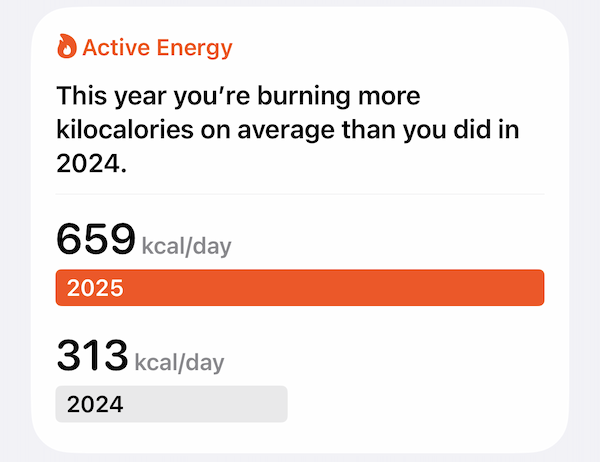
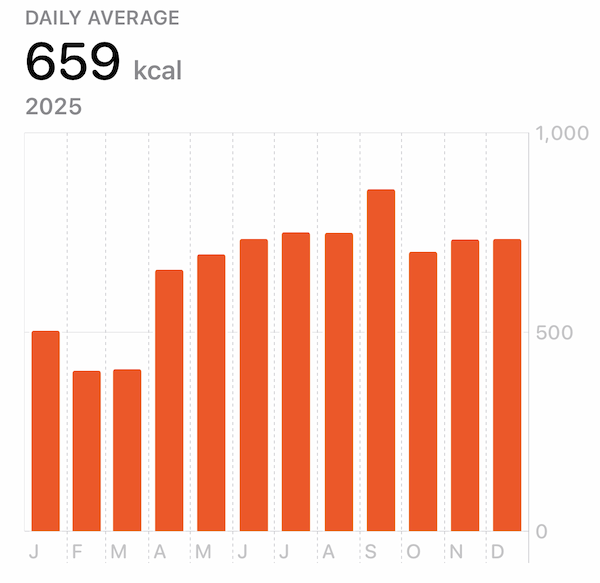
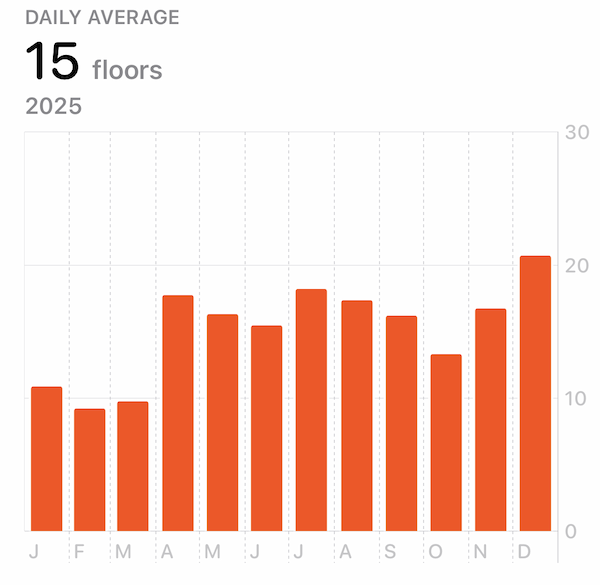
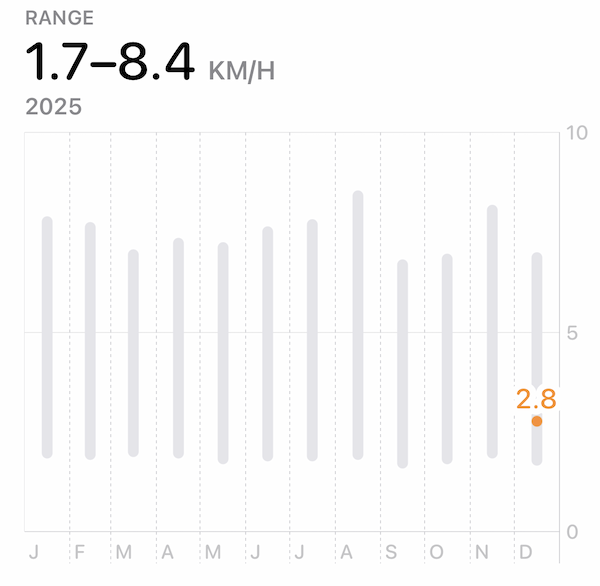
These screenshots are all from Apple Health’s summary of this year, taken from data collected by my iPhone.
Some of the data is what you’d expect from a pedometer – such as the number of flights of stairs per day:
It estimates my walking speed:
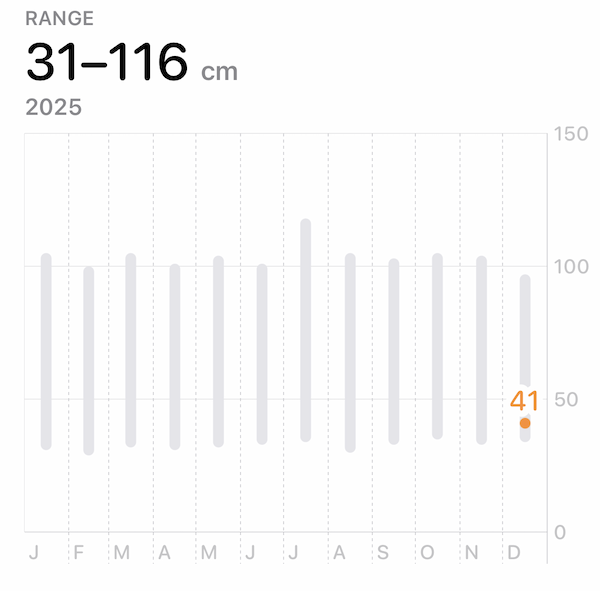
Some of the data is a little unusual – for example, my step length:
The more you look at the report that Apple Health produces, the more obscure the data gets.
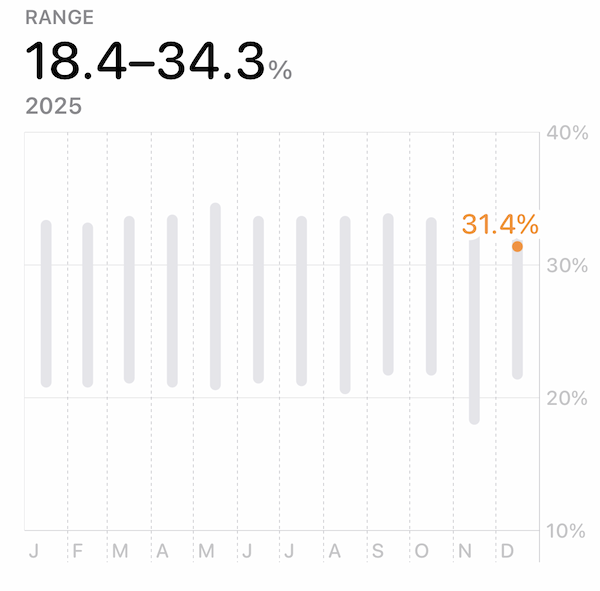
For example, “double support time” (percentage of time during walking that both feet are on the ground):
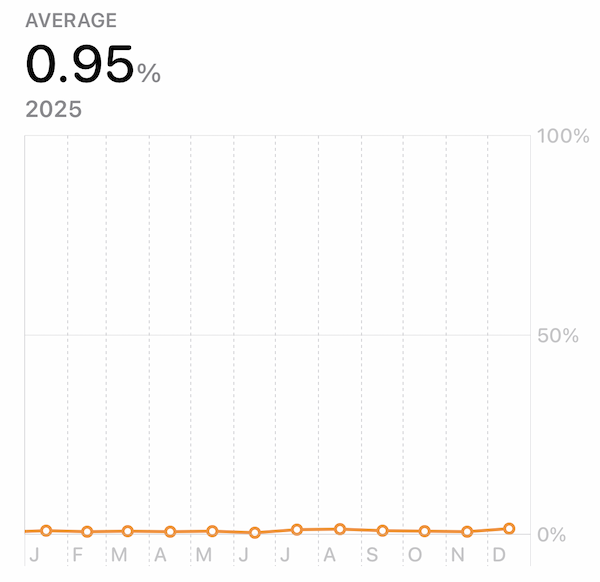
And “walking asymmetry” (percentage of time that steps with one foot are faster or slower than the other):
But I’m getting distracted going down the rabbit hole of “ooh, data!”. The point I wanted to make: I’ve made a concerted effort to walk this year.
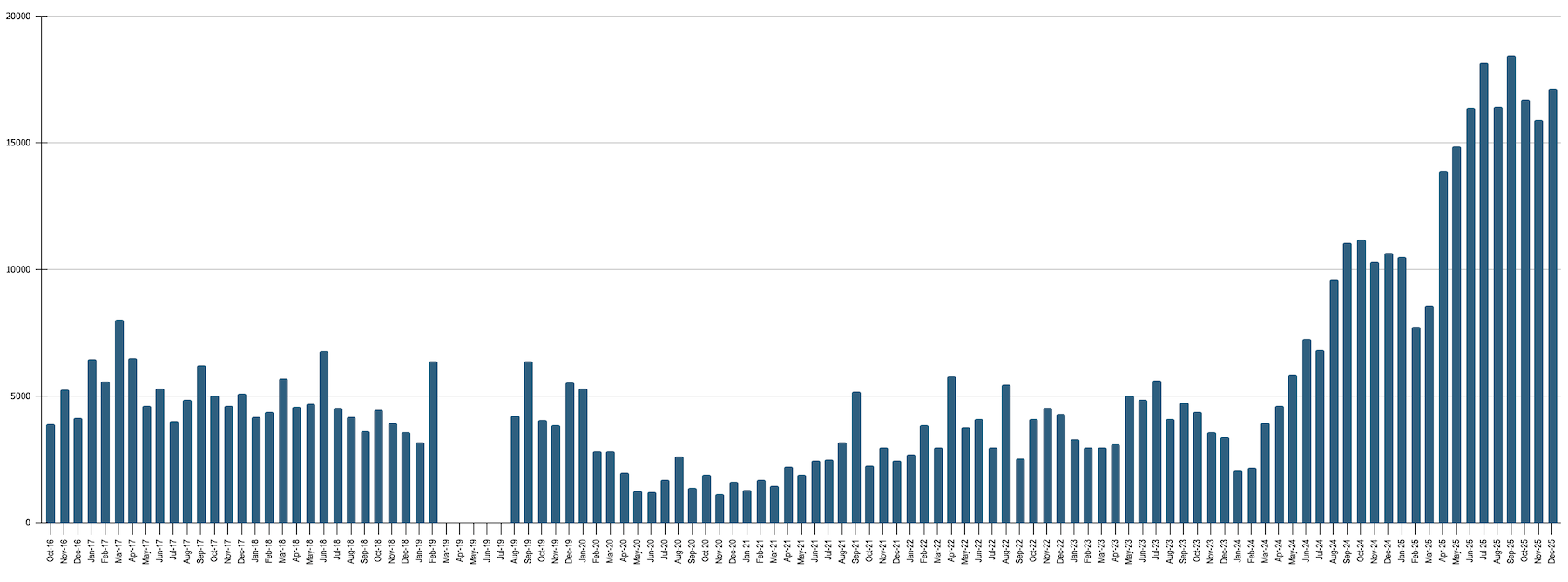
Putting all of this in the context of the data that Apple Health has collected about me since October 2016 shows what a difference this is. Even if you ignore 2020 and early 2021 (none of us moved that much during COVID, did we?), the idea that I’m regularly, consistently doing an average of 15,000 steps a day (even in the autumn and winter months when the weather is horrid) is a new thing for me, and feels like a real achievement.
Tags: 2025-year-in-review