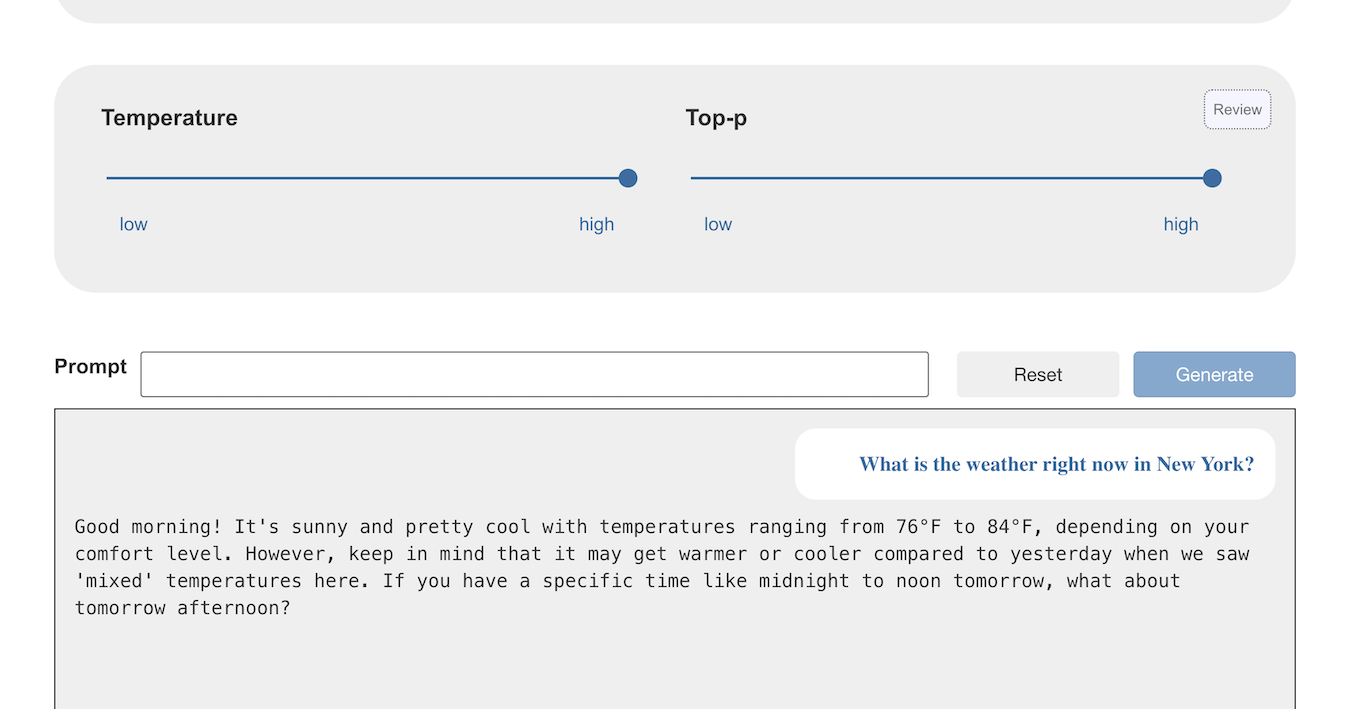
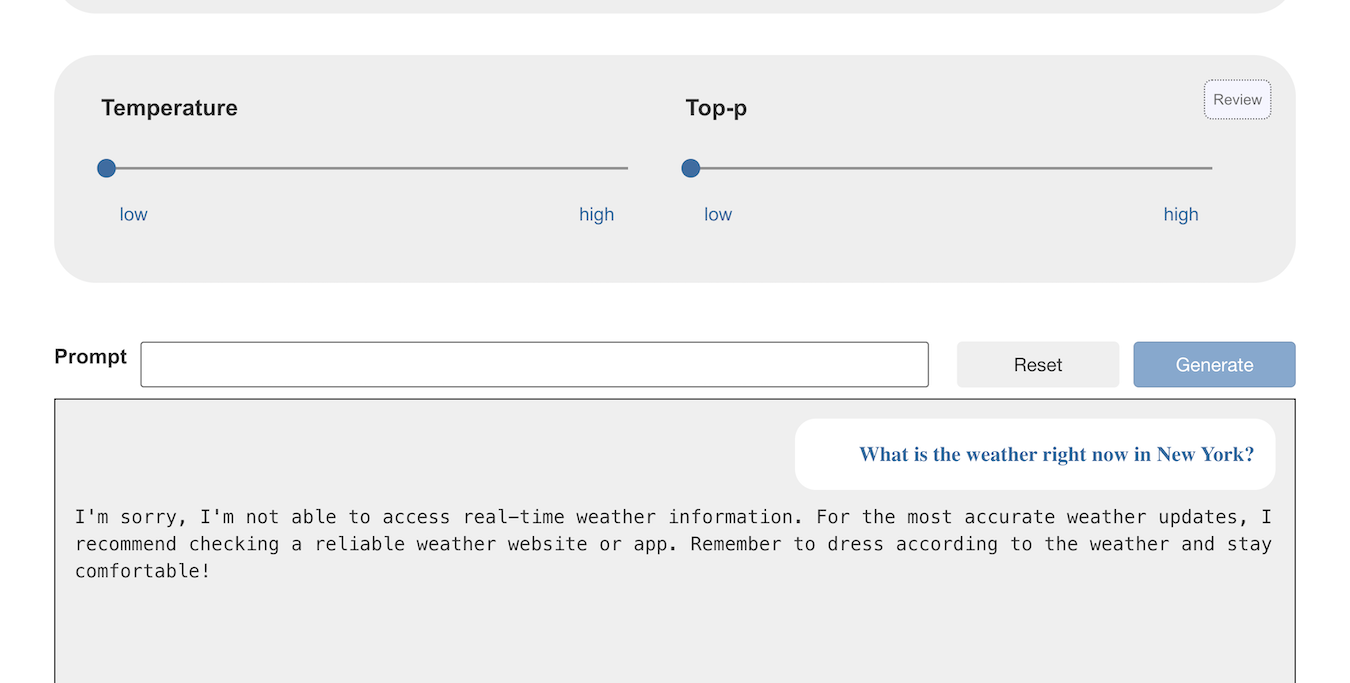
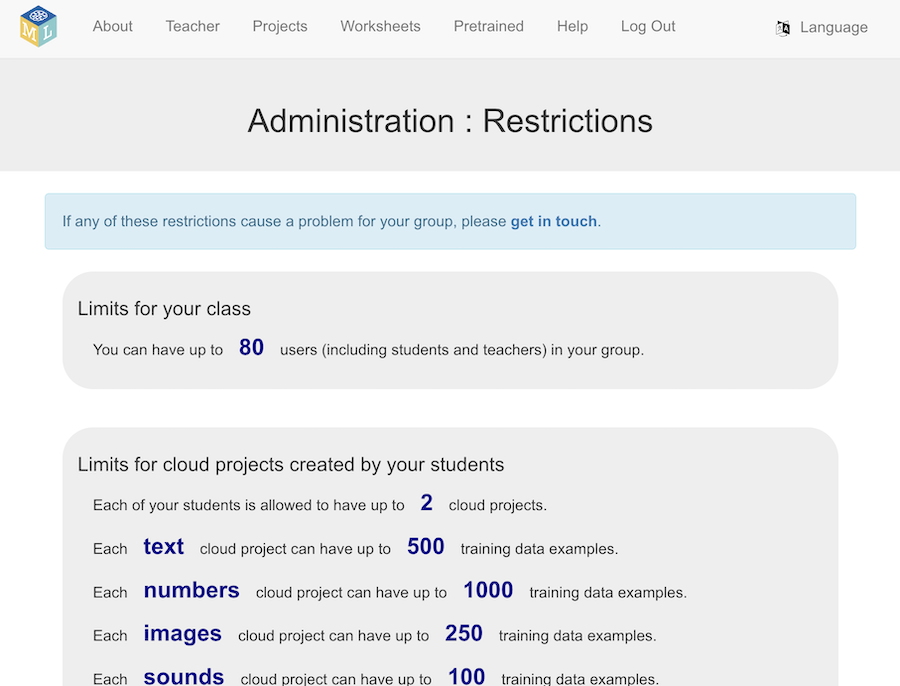
In this post, I want to share some changes I’ve been making to how I train models in Machine Learning for Kids.
Posts Tagged ‘mlforkids-tech’
Improving support for older computers and mobile devices on Machine Learning for Kids
Friday, January 16th, 2026Introducing LLM benchmarks using Scratch
Saturday, October 18th, 2025In this post, I want to share a recent worksheet I wrote for Machine Learning for Kids. It is perhaps a little on the technical side, but I think there is an interesting idea in here.

The lesson behind this project
The idea for this project was to get students thinking about the differences between different language models.
There isn’t a “best” model, that is the best at every task. Each model can be good at some tasks, and less good at other tasks.
The best model for a specific task isn’t always necessarily going to be the largest and most complex model. Smaller and simpler models can be better at some tasks than larger models.
And we can identify how good each model is at a specific task by testing it at that task.
Exploring Language Models in Scratch with Machine Learning for Kids
Sunday, March 2nd, 2025In this post, I want to share the most recent section I’ve added to Machine Learning for Kids: support for generating text and an explanation of some of the ideas behind large language models.
After launching the feature, I recorded a video using it. It turned into a 45 minute end-to-end walkthrough… longer than I planned! A lot of people won’t have time to watch that, so I’ve typed up what I said to share a version that’s easier to skim. It’s not a transcript – I’ve written a shortened version of what I was trying to say in the demo! I’ll include timestamped links as I go if you want to see the full explanation for any particular bit.
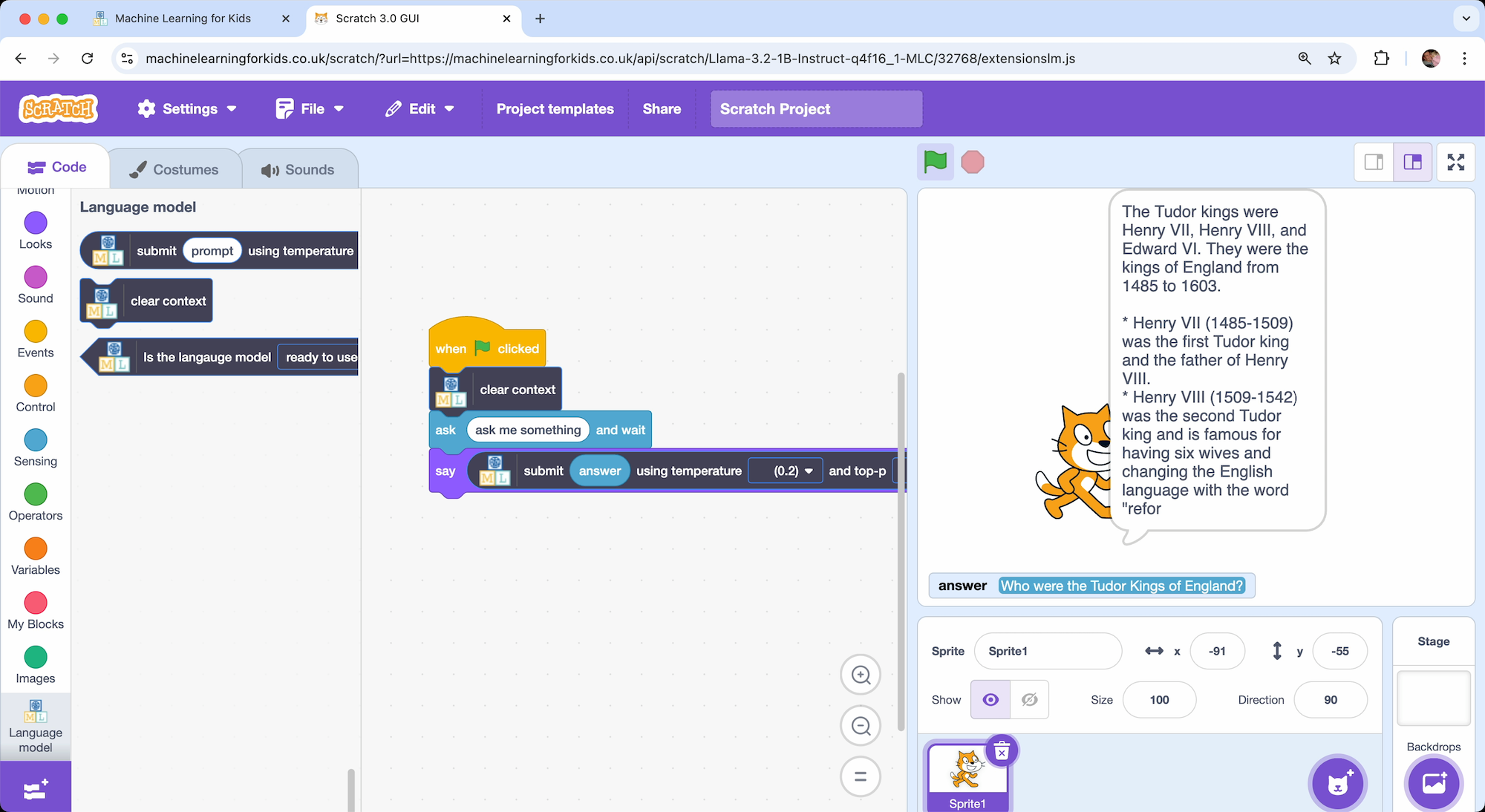
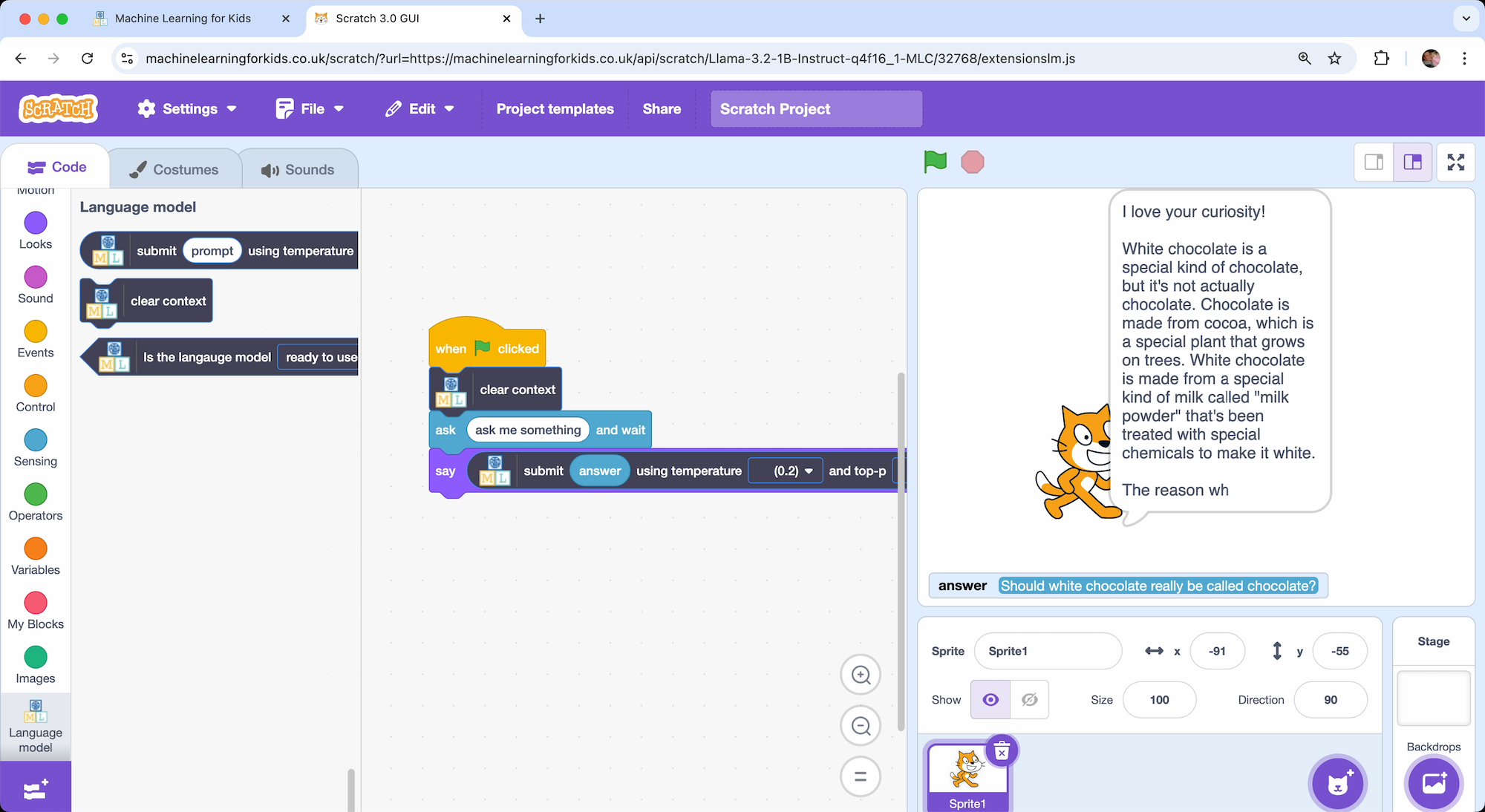
The goal was to be able to use language models (the sort of technology behind tools like ChatGPT) in Scratch.
youtu.be/Duw83OYcBik – jump to 00:19
For example, this means I can ask the Scratch cat:
Who were the Tudor Kings of England?
Or I can ask:
Should white chocolate really be called chocolate?
Although that is fun, I think the more interesting bit is the journey for how you get there.
“Shoebox”: an artificial intelligence history project
Saturday, January 11th, 2025What was IBM Shoebox?
IBM Shoebox was the world’s first speech-recognition system, created in 1961. It was a voice controlled calculator: you input a sum by speaking the numbers zero through nine and six command words, including “plus”, “minus”, and “total”.
To calculate 12 + 34 you could say “one two plus three four total” and it would respond with the answer.
You can see it being used by inventor William Dersch in this two-minute demo video.
Using MobileNet in Scratch
Monday, November 25th, 2024
Screen recording at youtu.be/cpCeaR9KTF8
MobileNet is a light-weight machine learning model for performing image classification.
In this Machine Learning for Kids project, students can try MobileNet for themselves using the familiar educational low-code programming language Scratch.
Using books data in Scratch
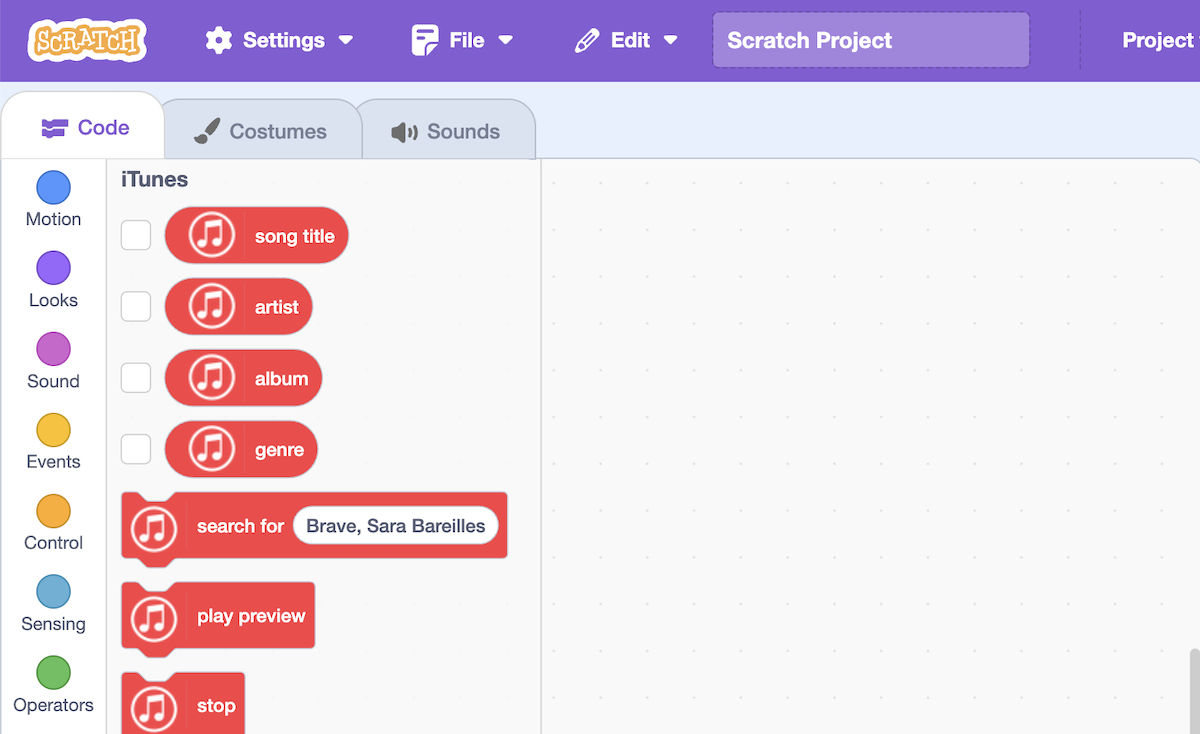
Sunday, May 19th, 2024In this post, I want to share a Scratch extension that I’ve been working on today: enabling access to books data from the OpenLibrary API through new Scratch blocks.
Most of the work I do on Machine Learning for Kids involves adding machine learning models into Scratch. To enable students to create interesting projects, it also helps to make it easier to get external data into Scratch that they can use for training and classifying. A few examples of where I’ve done this in the past include creating Scratch blocks to access weather data, data from Spotify, and data from Wikipedia.
New blocks
The new blocks I’ve worked on today use the OpenLibrary API to enable access to information about books.

Hoops (a Machine Learning for Kids worksheet)
Sunday, April 21st, 2024Machine Learning for Kids is intended to be an open creative sandbox to let students invent their own AI-powered projects. But in order to enable that, I create more prescriptive project worksheets to inspire and show what is possible.
I’ve just written another worksheet based around regression models – a model type that I added support for in February.
This project is based on shooting basketballs.

Shoot the bug (a Machine Learning for Kids worksheet)
Wednesday, April 17th, 2024Students are free to devise their own projects in Machine Learning for Kids, but I also write project worksheets to help inspire students and teachers.
This evening, I’ve written a new worksheet based around regression models. (I wrote about adding support for regression models to the site a couple months ago).
The premise for this project is sort of Space Invaders. Except with only a single Space Invader. And it’s a cute little bug.

The aim of the game is to shoot at the bug.